Solutions · CRM
A CRM that follows how you sell, not how a template thinks you should.
Partnership deals, distributors, provider networks: when your pipeline has its own stages and its own paperwork, a generic CRM becomes a spreadsheet with a login. We build the one that fits.
What it covers
From first contact to signed agreement
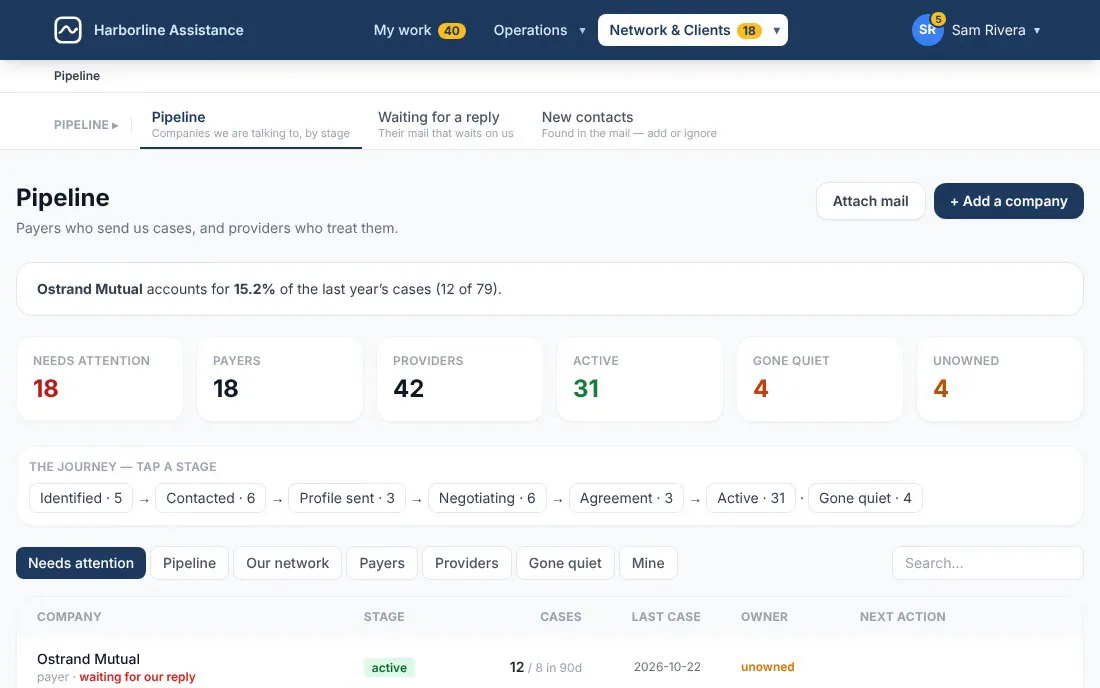
Pipelines with your stages
Each relationship moves through the steps your team really uses, with what is needed to move on.
Leads from the mailbox
A new company writing in becomes a proposed lead, with the message it came from attached.
Follow-ups that do not slip
Cadences and reminders, and a clear list of who is waiting on whom.
Requirements per partner
Agreements, licences and documents tracked per relationship, with what is still missing.
Concentration and forecasts
Where your business depends on too few partners, and what is likely to close.
Shared data, private deals
Several companies can share one directory while each keeps its own pipeline private.
Connected to the work, not beside it
A CRM is most useful when it is part of the operation: the partner you signed appears in the case form, the invoice they sent is matched to their record, and the pipeline shows the real volume of work each one brings.
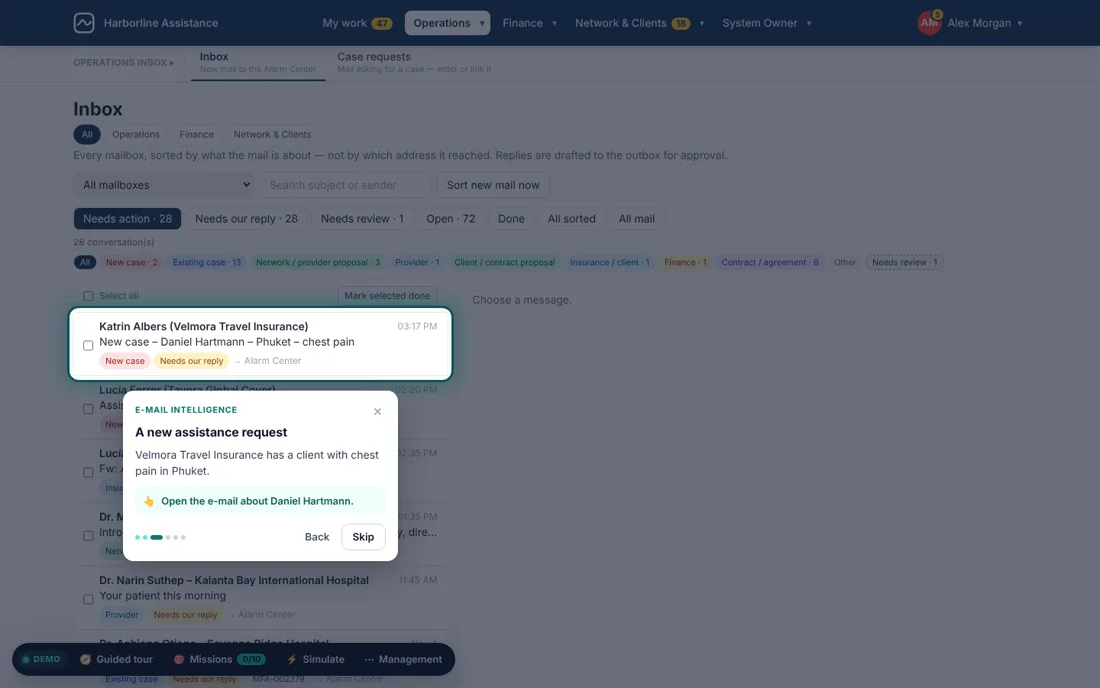
Built by us
 Operations platform
Medical assistance operations
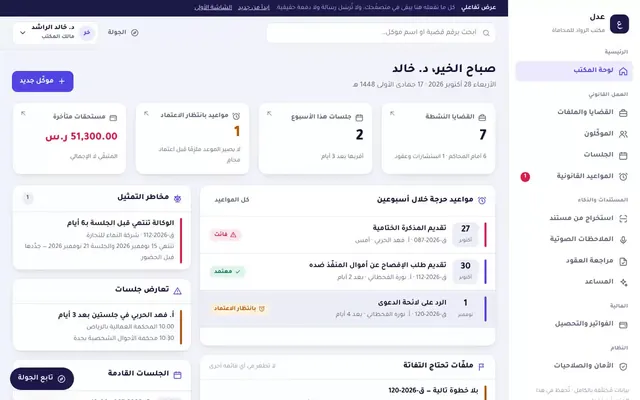 Product
Legal practice management SaaS
 Marketplace
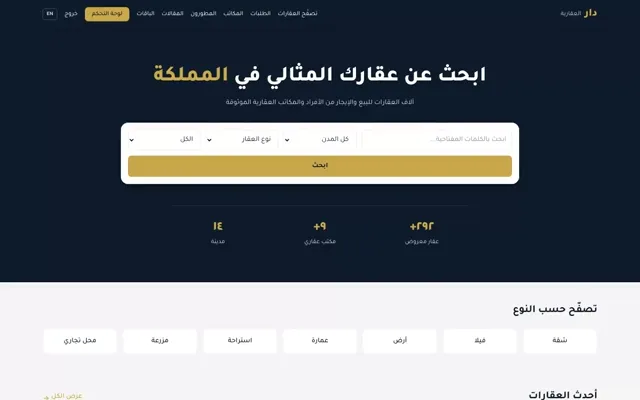
Property marketplace
Questions we are often asked
Why not just configure HubSpot or Salesforce?
If they fit, they are a good choice and we will say so. A custom CRM earns its place when the pipeline is tied to your operation, your documents or rules a template cannot express.
Can it send e-mail on its own?
It drafts. A person approves before anything leaves, and every message sent is on record — which also matters for consent rules such as GDPR.
Can we import our current contacts?
Yes, with duplicate detection that understands Arabic and English spellings of the same name.
Have a system like this in mind?
Tell us how your team works today. We will tell you honestly what we would build, or whether an existing product is enough.